This website uses cookies so that we can provide you with the best user experience possible. Cookie information is stored in your browser and performs functions such as recognising you when you return to our website and helping our team to understand which sections of the website you find most interesting and useful.
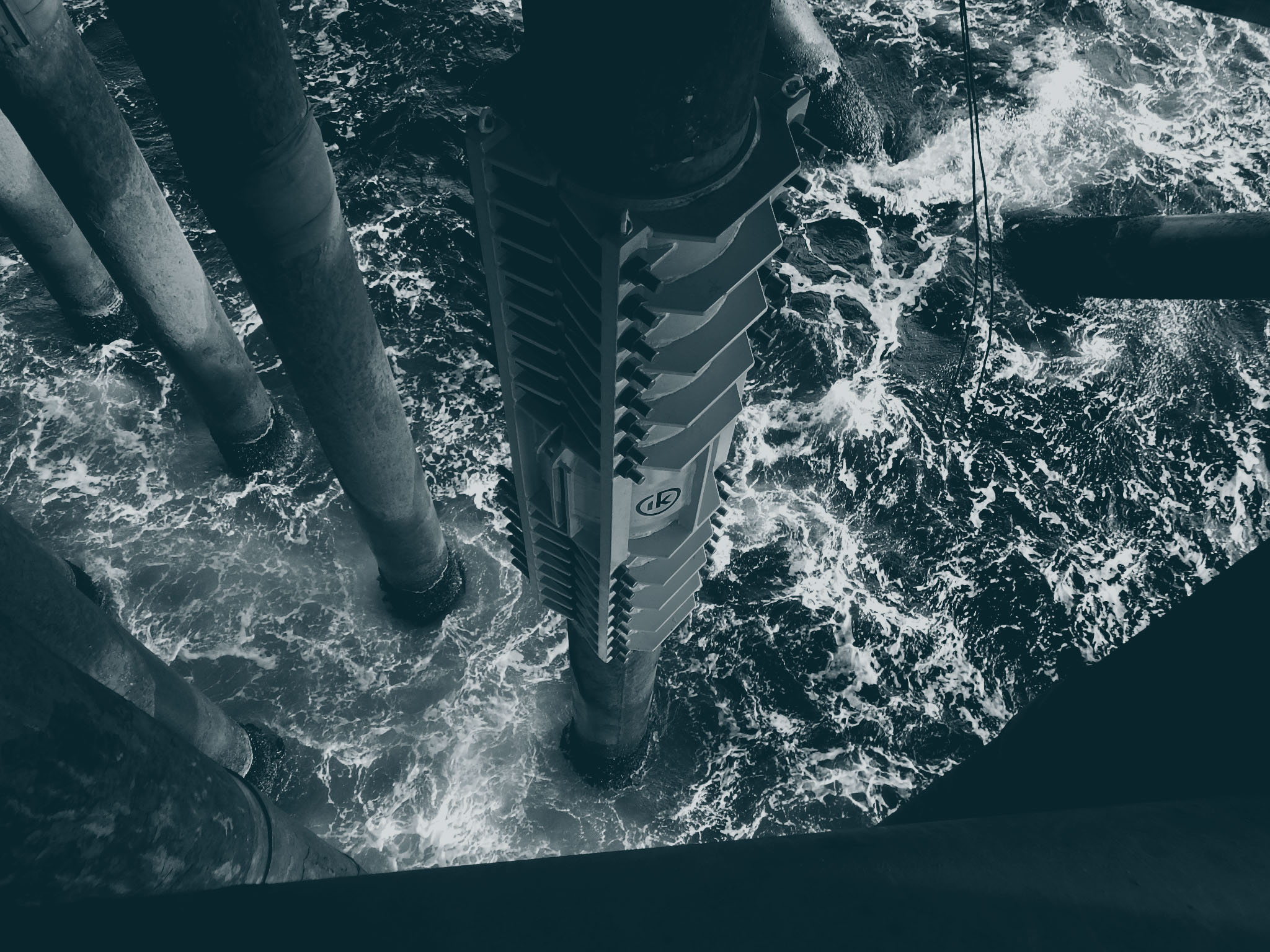
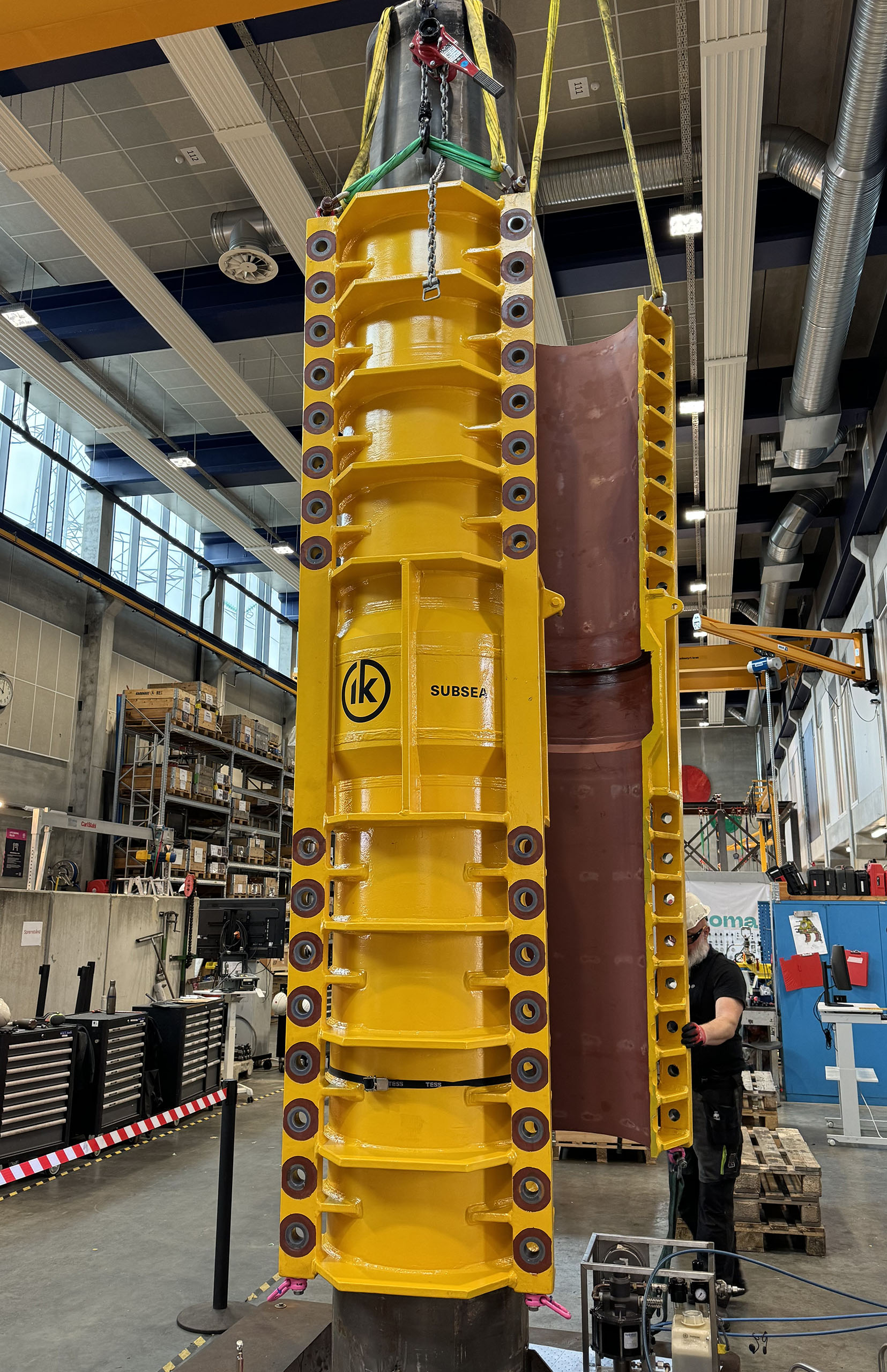
IK-22426 26” Splash Zone Conductor Clamp (North Sea)
Towards the end of 2023, a major North Sea operator requested the provision of a structural and sealing clamp for a 26” conductor located on a platform in the Norwegian Continental Shelf.
The objective was to reinstate the structural integrity of a failing conductor connection and restore sealing capability between two adjacent conductors situated approximately seven meters above sea level, within the splash zone. This area is known for extreme exposure to cyclic wave impact, corrosion, and fatigue, posing significant challenges to both design and installation.
Challenges
Installation in the splash zone (wave, tide, and corrosion exposure)
Failing structural and sealing joint between conductors
Rope access installation under dynamic offshore conditions
Design to match conductor capacity
Outcome
Custom-engineered clamp reinstating structural and sealing integrity
Optimized design for rope access installation
Structural capacity aligned with existing conductor limits
Delivered within schedule and installed without incidents
Successful restoration of conductor strength and sealing
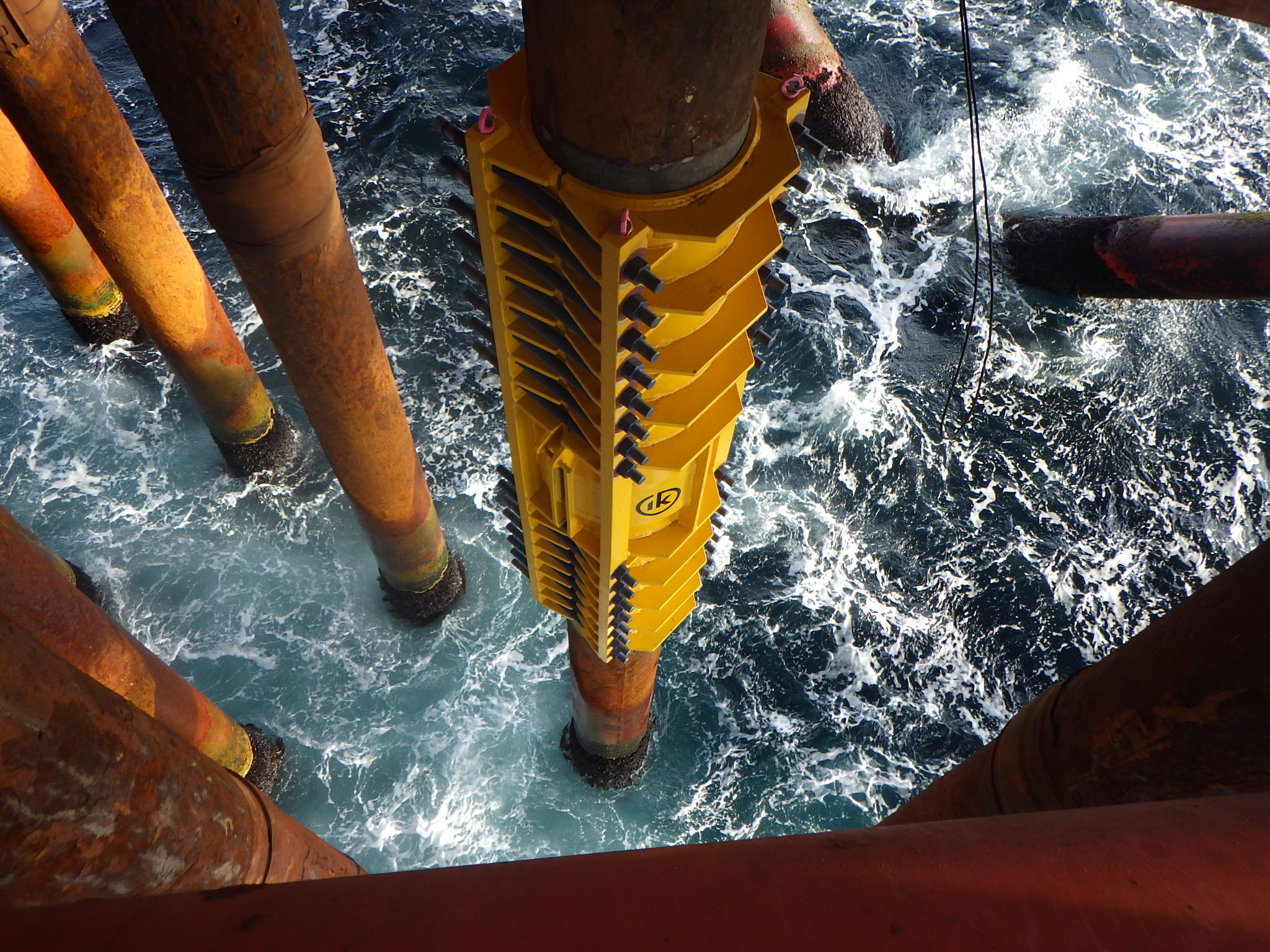
The project required a comprehensive approach to ensure both mechanical performance and practical installation feasibility. The 26” conductor joint exhibited degradation in both structure and sealing function due to prolonged exposure to the splash zone environment. To address this, we developed a custom-designed clamp system capable of transferring structural loads and reinstating the pressure-tight connection.
Collaboration with rope access technicians was integral to the design process. Their input guided critical design aspects such as clamp geometry, handling features, and installation methodology. This ensured that the clamp could be safely installed under challenging offshore conditions without compromising performance.
The clamp’s structural capacity was verified through detailed analysis and testing, confirming that it exceeded that of the existing conductor. However, in accordance with the design philosophy, the final criteria were based on the “weakest link” principle: optimizing the clamp to the actual capacity of the conductor, avoiding unnecessary mass and stress concentrations that could affect overall integrity.
Despite the harsh environmental exposure and operational complexities, the project was executed within the proposed timeframe. Offshore installation was carried out smoothly and without incidents. The installed clamp successfully restored both the structural strength and the sealing function of the conductor, ensuring continued safe operation.
This project demonstrates our capability to deliver engineered solutions for complex offshore repair and reinforcement tasks, combining mechanical design expertise with practical offshore installation experience.