This website uses cookies so that we can provide you with the best user experience possible. Cookie information is stored in your browser and performs functions such as recognising you when you return to our website and helping our team to understand which sections of the website you find most interesting and useful.
Repair of a 4” Flexible Flowline in Brazil
In 2020, an international offshore operator requested a mechanical solution to repair a damaged 4-inch gas-injection flexible flowline located in Brazil.
The flexible exhibited significant outer sheath damage, creating a risk of seawater ingress into the cross-section and compromising its integrity. Flexibles present a unique sealing challenge due to their multi-layered structure and varying armour configurations, requiring a controlled approach.
Challenges
Sealing of a flexible line with multiple structural layers
Preventing seawater ingress through the damaged outer sheath
Ensuring sufficient squeeze without collapsing the flexible cross-section
Integrating lifting capability (10 Te) into a compact device
Outcome
Mechanical scissor patch clamp designed for even circumferential pressure
Soft packer sealing achieved via three 120° pads (full 360° support)
Class 4 torque tool buckets for controlled squeeze application
Integrated lifting points for future flexible recovery
Delivered and installed quickly with no subsea bolt manipulation
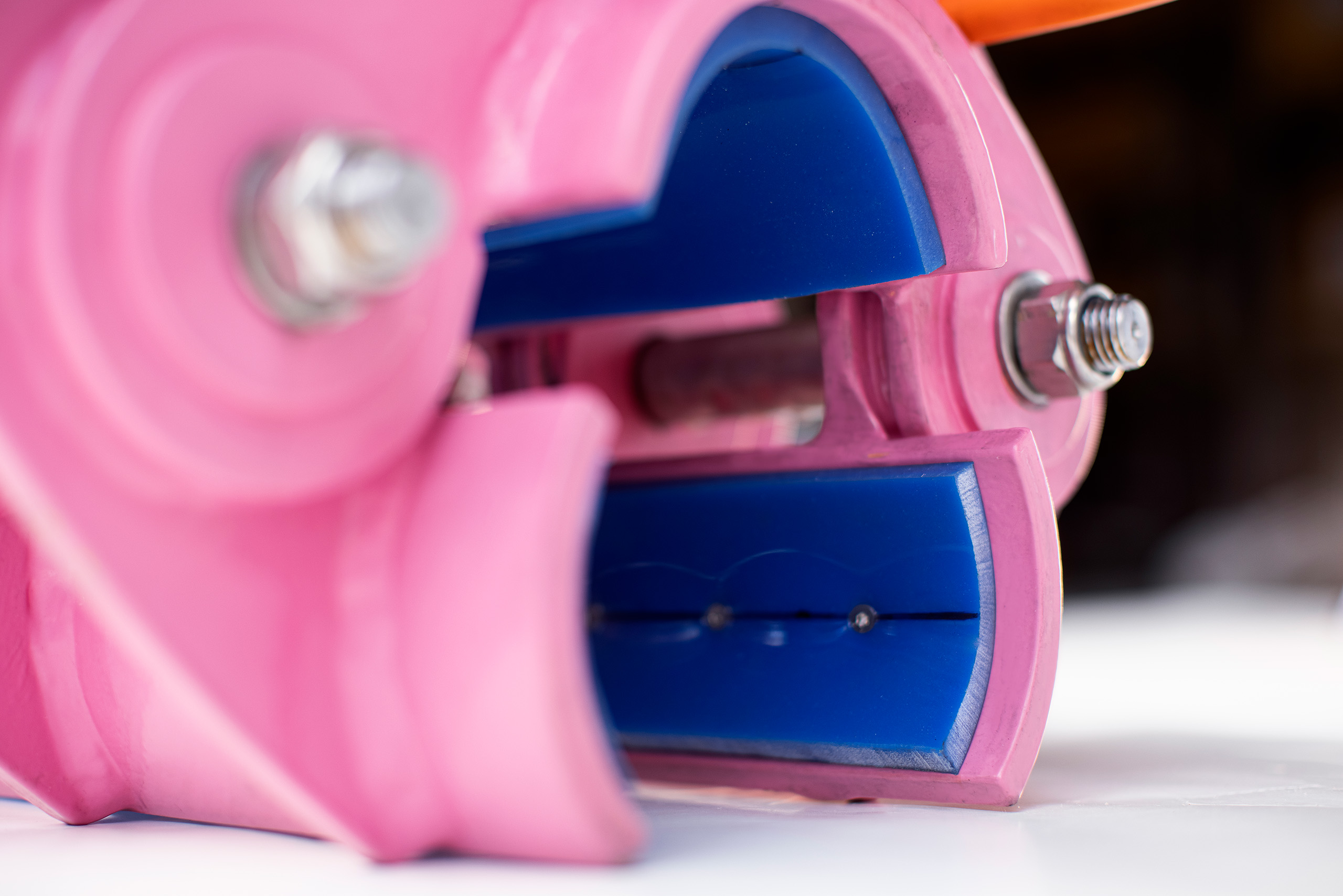
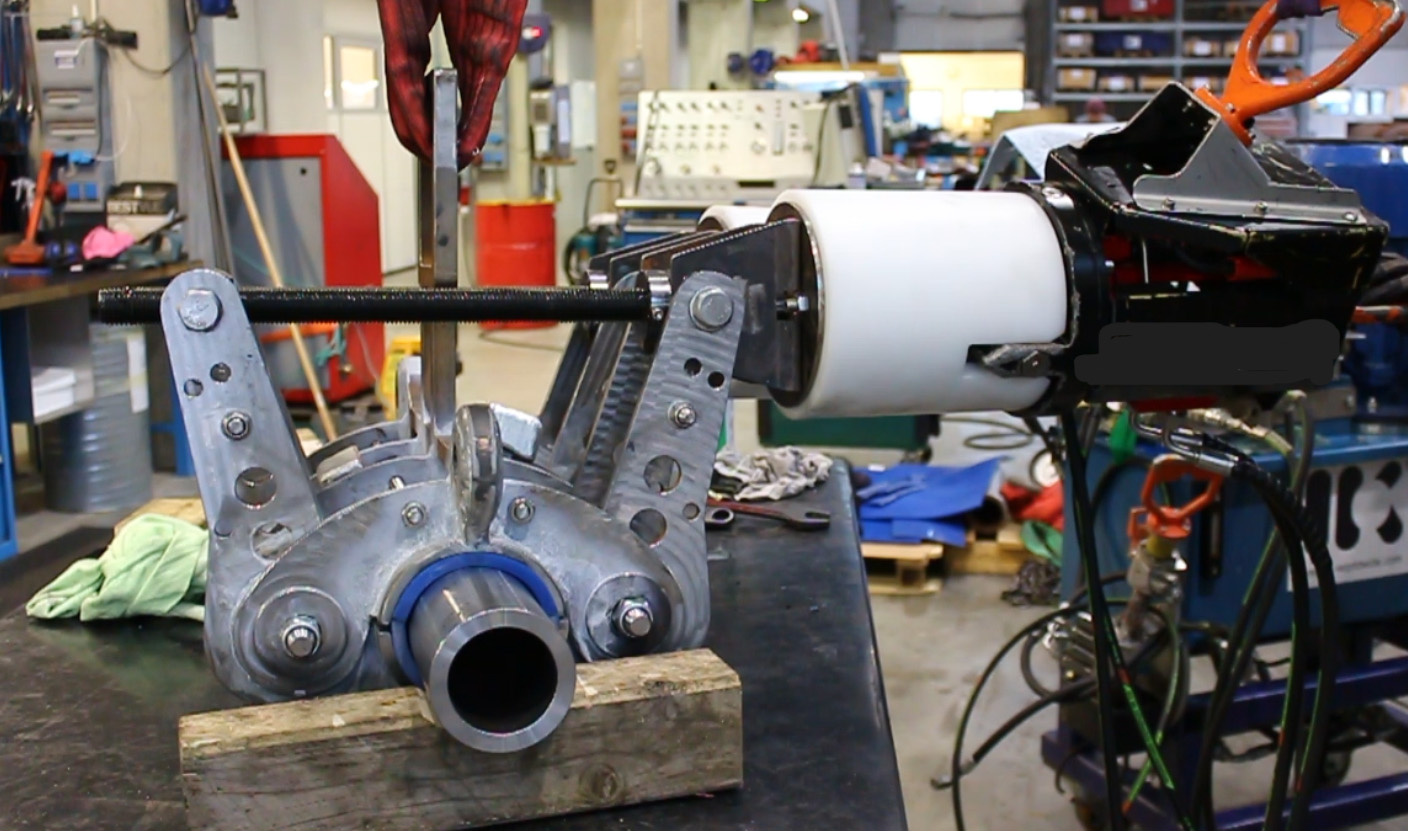
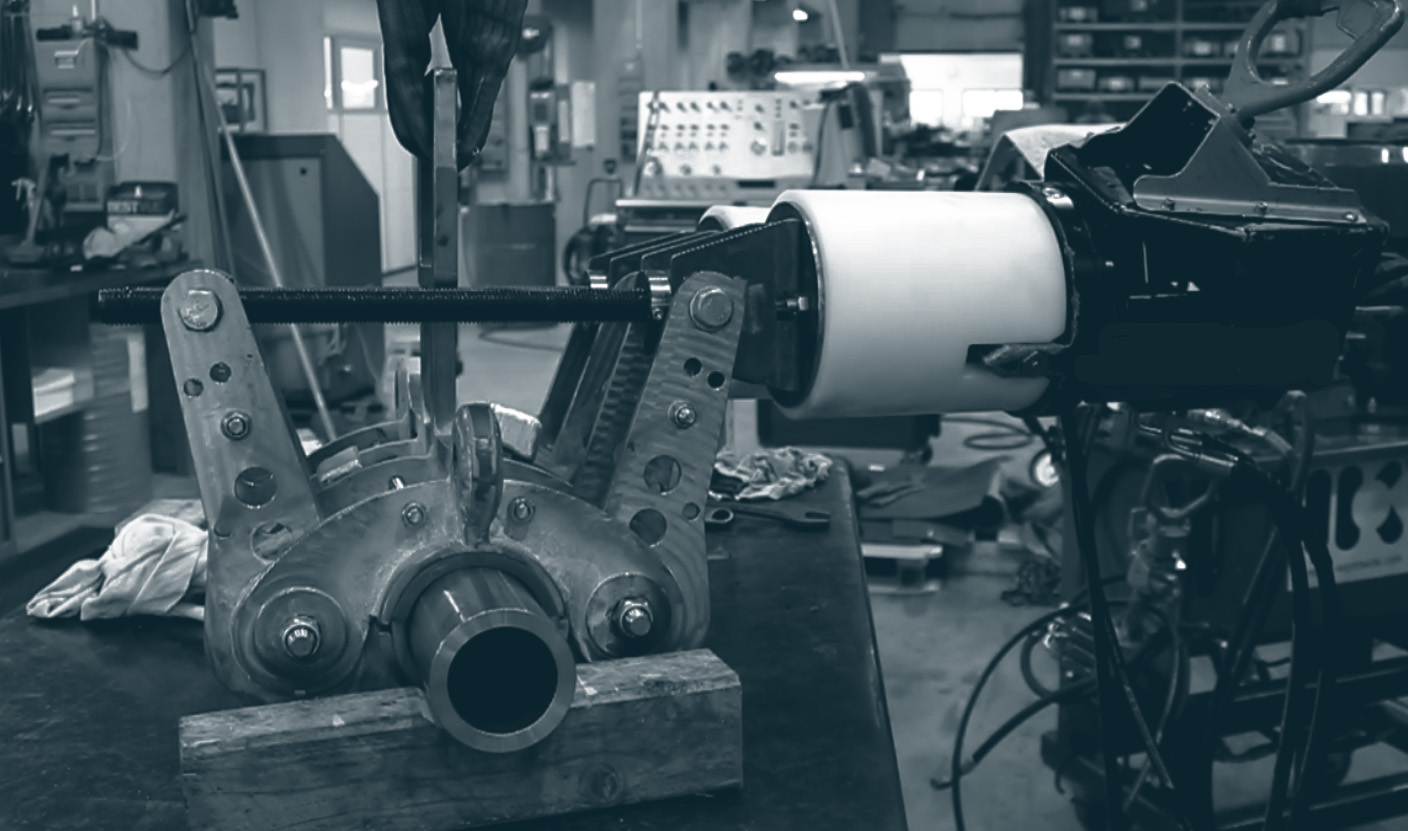
The selected repair concept was a mechanically based scissor patch clamp designed to apply even and substantial pressure onto the damaged flexible during lifting and handling operations. The clamp features a geometry that allows rapid installation by torquing the setting bolts from the exterior, eliminating the need for subsea bolt entry or complex subsea tooling.
Sealing is achieved through a soft packer arrangement supported 360° around the flexible. The sealing mechanism is divided into three 120° pads engineered to conform to the flexible’s layered construction while maintaining uniform contact pressure. This approach effectively prevents seawater ingress at the damaged area, thus reinstating the flexible’s protective barrier.
The clamp incorporated two Class 4 torque tool buckets to ensure accurate and repeatable application of the setting load. The engineering work balanced the need for sufficient squeeze to achieve sealing while avoiding excessive compression that could collapse or deform the flexible cross-section. Additionally, the clamp was designed with integrated lifting points, providing a safe recovery interface with a certified capacity of 10 Te.
This compact yet highly functional device demonstrates the importance of precise mechanical control when working with flexible flowlines. Despite its small size, the clamp underwent a thorough assessment for sealing performance, structural integrity, and lifting capability.
The successful delivery of this repair solution highlights our ability to engineer targeted, reliable repairs for complex flowline structures, combining practical offshore handling requirements with rigorous mechanical design.